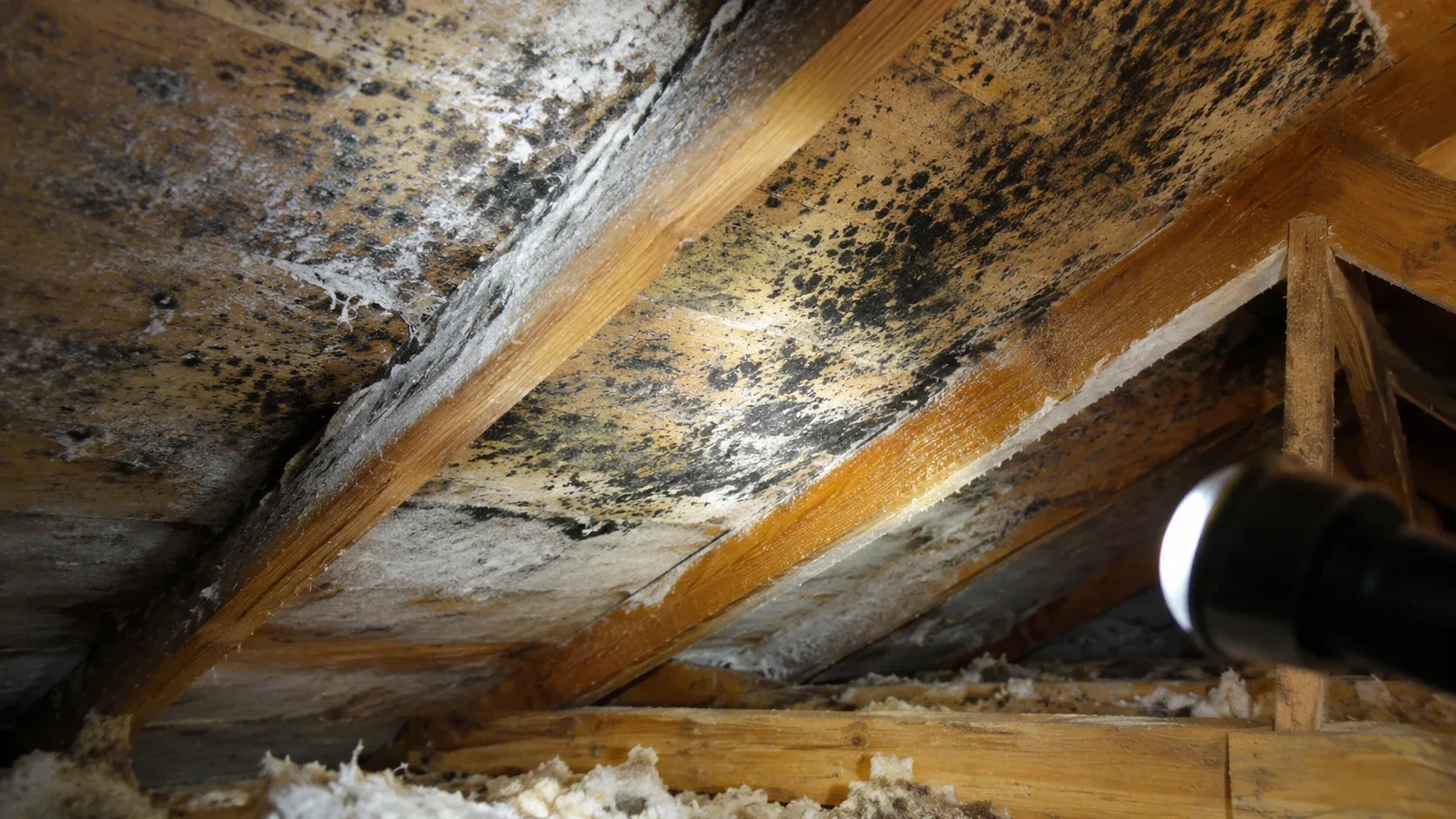
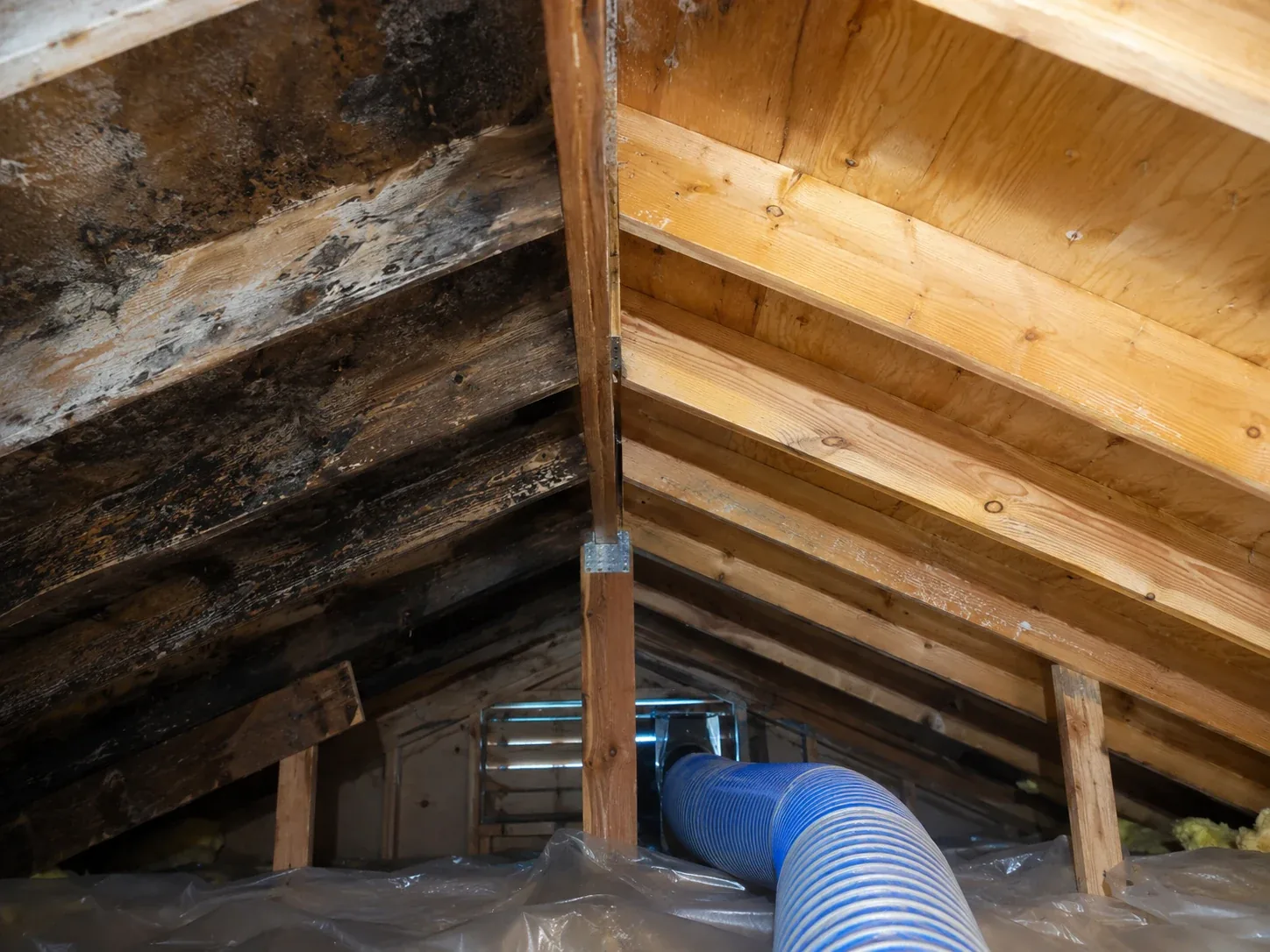
During cold weather, moisture carried by indoor air can reach a cold roof surface through gaps in the ceiling assembly. Repeated condensation can dampen sheathing or framing. This is a different route from rain entering a roofing defect, even if both affect the same attic bay. We investigate the pattern and history rather than treating every dark roof surface as proof of a roof leak.
Roof-entry water may follow a rafter before wetting insulation or a ceiling below. Ice dams can introduce meltwater near an eave, while other roof leaks originate around flashing or penetrations. Reno snow and thaw conditions make that history relevant. Tell us whether the finding appeared after snowfall, a thaw, rain or work on the roof, without climbing up to inspect it.
Ventilation, air leakage and exhaust routing can affect attic moisture conditions, but adding a vent is not a universal answer. A source assessment needs the construction and observed pattern. Appropriate roof, insulation or ventilation work may need coordination outside the removal scope. We distinguish that corrective work from cleaning or removing materials already affected inside the attic.