

24/7 emergency service available995 Forest St, Reno, NV 89509
Tree debris lying across storm-damaged shingles beneath dark skies near Reno mountains

RENO, NEVADA · STORM & WINTER DAMAGE

Storm Damage Restoration
in Reno, NV

Wind can drive rain, sleet and snow through a roof opening, a damaged window or siding. Our storm damage restoration service in Reno traces that intrusion through the interior so cleanup and drying address the materials reached after water crossed the building exterior.

  • Rain-entry routes assessed
  • Windows, walls and attics checked
  • Interior drying documented
Call about storm damage restoration{{PHONE_DISPLAY}}

24/7 emergency service available

WHAT THE SERVICE COVERS

Interior Cleanup After Stormwater Enters the Building

Storm damage cleanup addresses the water that has entered through the exterior shell. Rain can pass a window edge and reach insulation below, or enter an attic before appearing at a ceiling joint. We assess the interior route and the affected finishes. The cleanup boundary is based on those findings rather than only the size of the visible opening outside.

The work can involve extraction, assessment of soaked insulation and drywall, cleaning and structural drying. Damage to exterior roofing, glazing or siding also needs repair by the appropriate trade. An interior drying setup cannot prevent another storm from using an opening that remains exposed. We explain that connection while keeping the condition of the wet rooms at the center of the restoration plan.

This service concerns water entering the building through storm-related openings or failed weather protection. Rising water arriving across the ground is assessed through flood damage restoration instead. That distinction matters because the water path and contamination may differ. Tell us if the water appeared near a window during wind, dripped from above or entered at the floor from outdoors.

How Wind Changes the Route of Rain Into Reno Homes

Rain does not always fall straight down against a building. Wind can push it toward window joints, siding connections and roof details that were not leaking during calmer weather. In exposed parts of Caughlin Ranch or Northwest Reno, the direction of a storm can help explain which wall became wet. The actual entry still needs to be investigated rather than inferred from location alone.

Snow and sleet can also enter an opening and release water as they melt inside a colder attic or wall space. The room below may therefore show a stain after the strongest weather has passed. Note the timing and the face of the building that was exposed. Those details help connect an interior moisture pattern with the weather event.

Look for newly damp window trim, streaking below a sill, swollen wall finishes or fresh ceiling marks. Water can travel along framing before reaching a visible surface, so a stain may be offset from the entry. A surface that dries between storms can still conceal damp insulation, especially when the opening has admitted water more than once.

Wind-Driven Rain Can Enter Above the Floor

Schematic illustration
Wind-Driven Rain Can Enter Above the FloorThe arrows show rain crossing roof and window openings, then traveling inside the wall. This is a building-entry pattern, separate from floodwater rising across the ground.Wind-driven rainRoof openingWindow entryWater crosses the exterior shellDifferent from rising ground-level floodwater
The arrows show rain crossing roof and window openings, then traveling inside the wall. This is a building-entry pattern, separate from floodwater rising across the ground.
Scroll across the schematic on smaller screens

HOW THE WORK IS CARRIED OUT

Our Storm Damage Restoration Process in Reno, NV

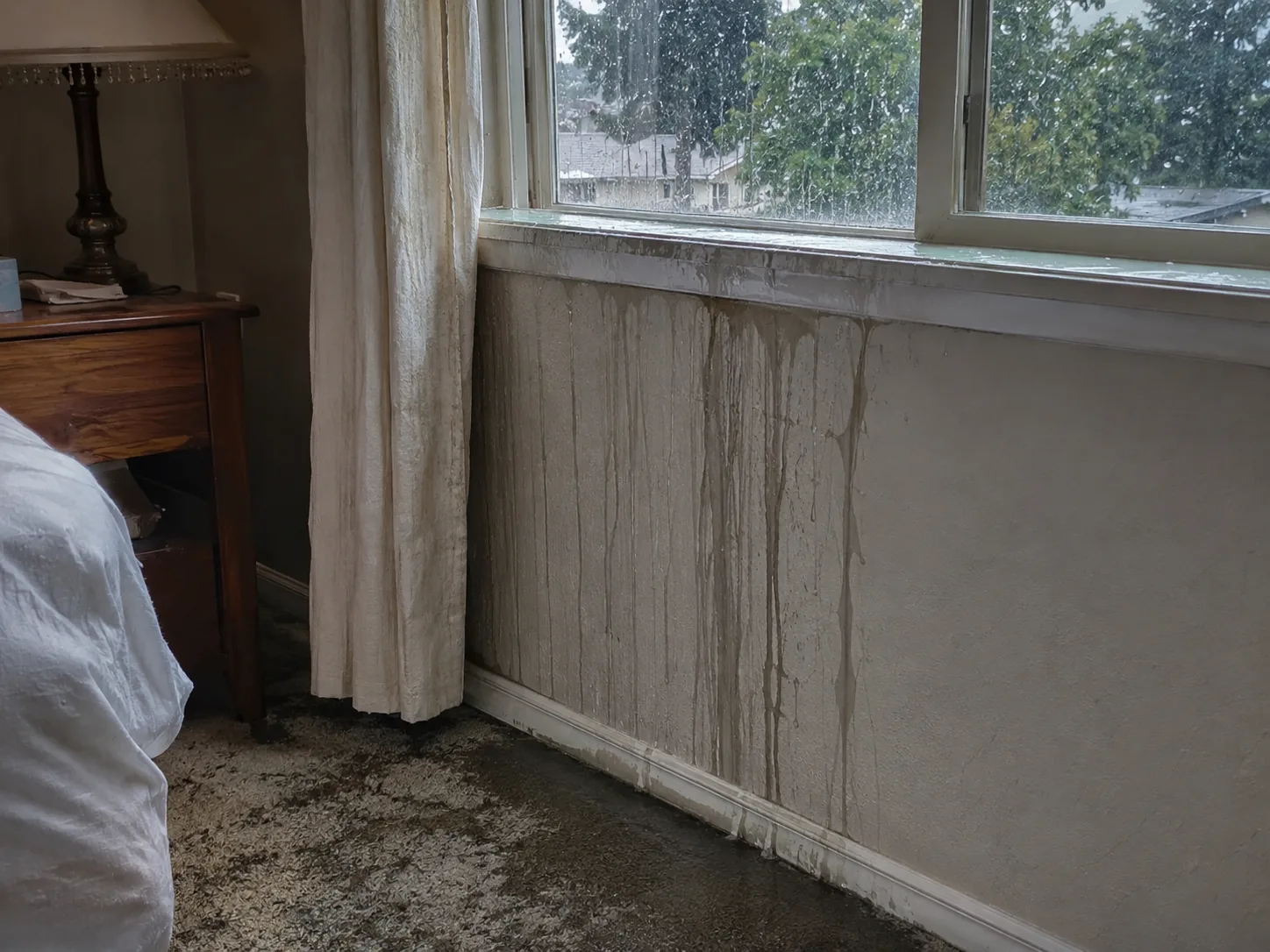
Water stains running beneath a bedroom window after rain entered around the frame

Connect exterior observations with interior moisture

We ask which side of the home faced the wind and where water first appeared inside. Accessible attic, window and wall areas are assessed around that history. Readings help identify the wet boundary without assuming every stain is directly below a roof opening. Findings are explained alongside the need to control the exterior entry before further weather adds water to the same location.

Assess the materials reached along that route

Water at floor level is removed where present, and affected finishes or insulation are evaluated for condition and access. A window leak may require checking below the sill and at the floor, while an attic entry can involve materials above the ceiling. Removal is discussed where a wet layer cannot remain or prevents assessment of the assembly behind it.

Dry the interior and recheck vulnerable areas

Air movement and dehumidification are arranged for the materials that remain. Documented readings show where moisture is decreasing and where a concealed pocket may need another approach. We also ask if water has entered again while exterior repair is being addressed. Drying decisions follow the interior measurements, with final checks before wet construction is covered by new finishes.

What to Do Before We Arrive

Do not climb onto a roof or approach damaged glazing to confirm a storm opening. Indoor observations made from stable, dry areas can provide the information needed for the first conversation.

  • Stay away from broken windows, hanging siding and loose roof material. Falling debris can remain a concern after wind has dropped.
  • Avoid wet light fixtures and ceiling areas that are sagging or shedding material. Do not place belongings beneath a visibly weakened ceiling.
  • Leave roof access and exterior openings to people equipped to assess them. A ladder on wet ground can create another hazard during cleanup preparation.
  • Photograph interior staining from a safe position and note when it appeared. Include which wall faced the weather if that is known.
  • Do not operate household fans in a cavity with suspected contamination or mold. Describe the affected area before moving air through it.

Questions About Storm Damage Restoration in Reno

Call {{PHONE_DISPLAY}}

Does this service cover water coming through a storm-damaged window?

Yes, the interior route beneath and around a damaged window is part of the assessment. Water may wet the wall below the sill and continue to the floor even when the visible drip is small. The glazing or exterior opening also needs repair. Interior cleanup and drying address the materials reached by that water rather than replacing the failed exterior detail.

Why does the ceiling stain appear after the storm has ended?

Water or windblown snow can collect within an attic or move slowly through insulation before reaching the ceiling surface. A delayed stain may therefore relate to the earlier storm. Tell us when weather struck and when the mark appeared. That sequence helps guide checks above and beside the stain, without treating timing alone as proof of the precise entry point.

Is storm intrusion the same as a flood loss?

Not always. Rain entering through roofing, a window or siding crosses the building shell above ground. Floodwater rises or travels in from outdoors at lower openings and may carry soil or other contamination. Describe both the entry and the water’s appearance when calling. A home can experience more than one route, so the affected areas are assessed rather than grouped by the weather label alone.

Can interior drying finish while the opening still leaks?

An opening that keeps admitting water can rewet materials and disrupt drying. The exterior source therefore needs to be addressed alongside the interior work. Moisture readings help distinguish progress from renewed wetting, but equipment is not a substitute for closing the entry route. We explain that dependency when discussing the affected attic, wall or room.

24/7 emergency service available

Call About Storm Damage Restoration in Reno, NV

Call about interior stormwater and describe the roof, window or wall where it entered, along with any continuing exposure to the weather.

Call Reno StormGuard{{PHONE_DISPLAY}}
Call {{PHONE_DISPLAY}}